

Finned Tube
Jiangsu Yonghengxin International Trade Co., Ltd. was established in 2018. It is a company engaged in the sale and import and export of goods. Its business scope includes sales and other business activities. The company operates and acts as an agent for the import and export of various commodities and technologies, except for commodities and technologies that are restricted by the state to be operated by enterprises or prohibited from import and export; sales of metal materials, metal products, electronic products, hardware products, handicrafts, jewelry, daily necessities, cultural supplies, office supplies, labor protection supplies, packaging materials, textiles, knitwear, textile raw materials, clothing, apparel, shoes and hats, and bags. (Projects that must be approved according to law can only be carried out after approval by relevant departments)


Why Choose Us
Production Market
The company's products are not only sold within the province, but also throughout the country, and its business has expanded to countries such as South Korea and Canada.
Our Service
The company actively provides customers with product knowledge and helps guide them in choosing the most suitable products. Through pre-sales service, customers gain valuable knowledge in addition to the tangible products they purchase.
Quality Assurance
Every product produced in our factory undergoes a strict testing process, and its quality is 100% guaranteed before leaving the factory.
Types of Finned Tube

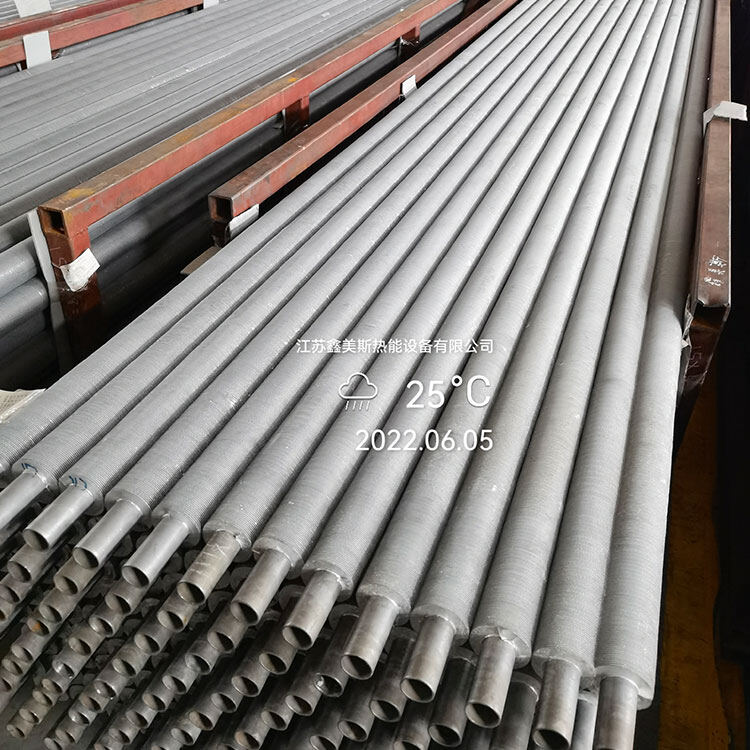
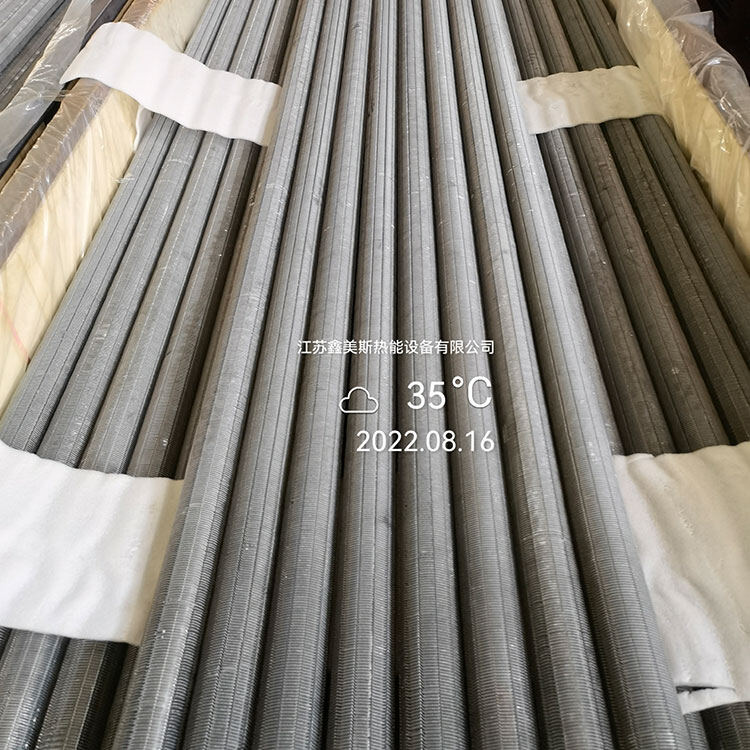
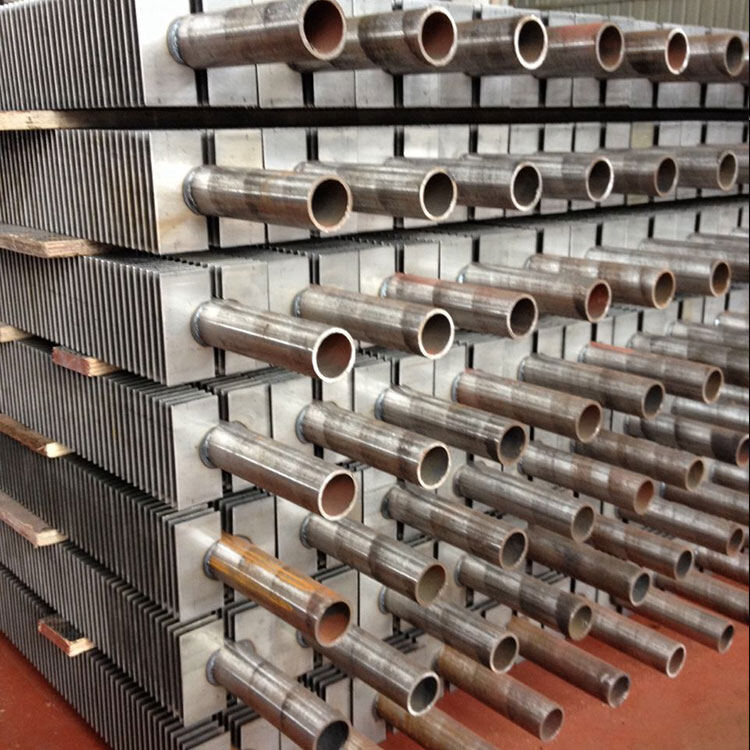
Elfin finned tubes
Elfin finned tubes have found takers and wide-scale usage in hydropower generator coolers. They are typically used to cool the generator used in these stations. In an Elfin tube, the fin strip is mechanically forced on the outer side to ensure adhesion of the fin to the heat exchanger tube.
Bulleted fins
Bulleted fins are similar to Elfin tubes and have become popular as a convenient and cost-effective method to attach strip fins to tubes. They are manufactured by manually placing fins over the tubes and pushing and pulling a bullet through the tube to expand the tube wall out into the fins.
L finned tubes
The L finned mechanical tube receives its name from the letter L, which it creates from the cross-sectional view. L finned tubes maximize the heat transfer capacity and enhance corrosion protection. These heat exchanger tubes accommodate temperatures between 150 to 170 degrees. They come in ductile metals, such as aluminum or copper, that can withstand the compression around the fin’s base.
LL finned tubes
LL finned tubes are manufactured in the same way the L fins. However, they have LL fins that have overlapping feet and completely enclose the base tube. As a result, they are more resistant to corrosion. These heat exchanger tubes usually are available in copper and aluminum and have a maximum operating temperature similar to that of L finned tubes.
KL finned tubes
The KL in the name of this category of tubes stands for Knurled Finned. The fin in these tubes is wrapped around the tube and the foot is rolled out into the outer surface of the pre-knurled tube and secured at each end. These fins are made of thin strips of metal, machined into an L-shaped foot.
G embedded finned tube
The G embedded finned tube has a unique design feature wherein the fin is inserted and welded into a helical groove cut into the tubes. These mechanical tubes are perfect for higher temperatures. They are durable and best suited for high thermal cycling because they can withstand temperatures up to 400 degrees.
Extruded finned tube
Two metals are used to manufacture extruded finned tubes. The outer surface is usually aluminum, while the inner tube is of any material. These heat exchanger tubes are quite popular because they offer excellent corrosion protection of the base tube. Also, they exclude all exposure to any outside fluid. Extruded finned tubes have found application in heat pipes, dry air coolers, energy recovery in the air exhaust system, etc.
Wire finned tube
The wire loop tube offers excellent heat transfer because it promotes turbulence in the fluid passing over it. These tubes consist of an elongated wire loop that increases the surface. The loops are spirally wound onto the top of the tube wall and fixed using a binding wire at the loop’s base. These tubes can withstand temperatures of up to 250 degrees.
HFW (high frequency welded) finned tubes
These tubes have fins that are welded onto the tube using a high frequency welding process. They are typically used in air-cooled heat exchangers, and their design can provide improved heat transfer efficiency compared to other types of finned tubes.
Longitudinal finned tubes
These tubes have fins that run along the length of the tube, rather than around the circumference. They are typically used in applications where space is limited, such as in compact heat exchangers.
Low finned tubes
These tubes have fins that are shorter than other types of finned tubes, which reduces the distance between the fins and increases the heat transfer efficiency. They are commonly used in air conditioning systems and heat exchangers for the hvac industry.
Benefits of Finned Tubes

Enhanced heat transfer
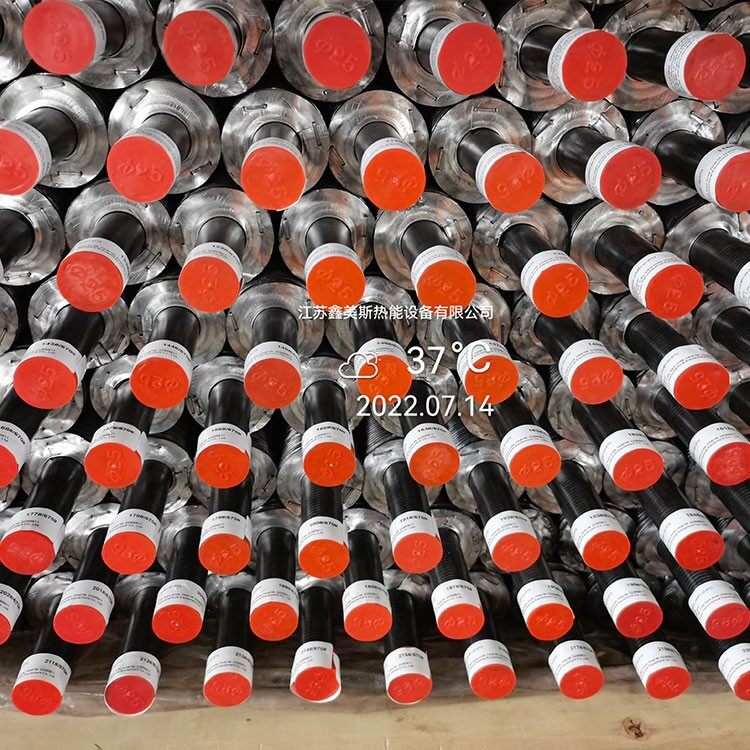
The fins increase the surface area, allowing for more effective heat exchange.
Compact design
Finned tubes can achieve the same heat transfer rate as larger plain tubes, enabling more compact equipment design.
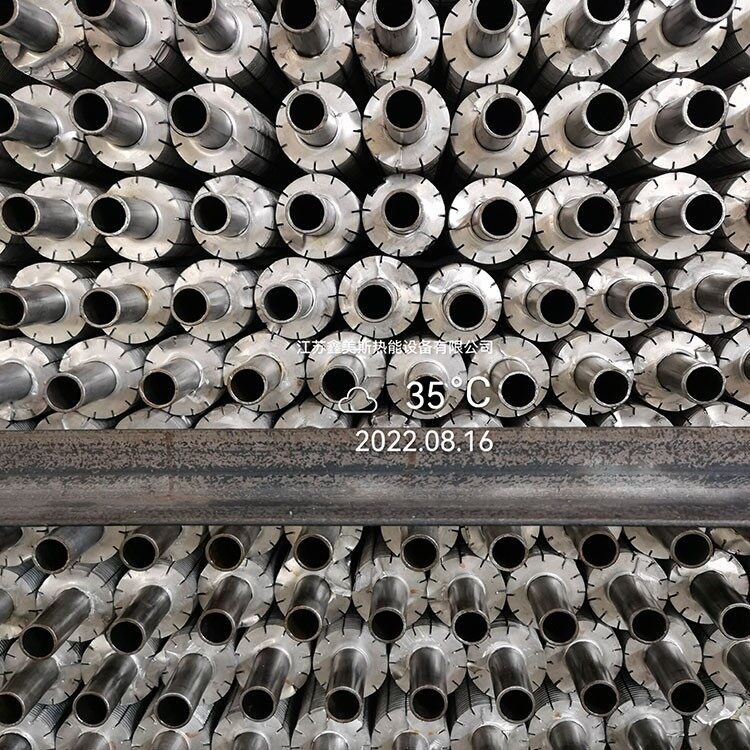
Material versatility
Available in various materials to suit different environmental and operational conditions.
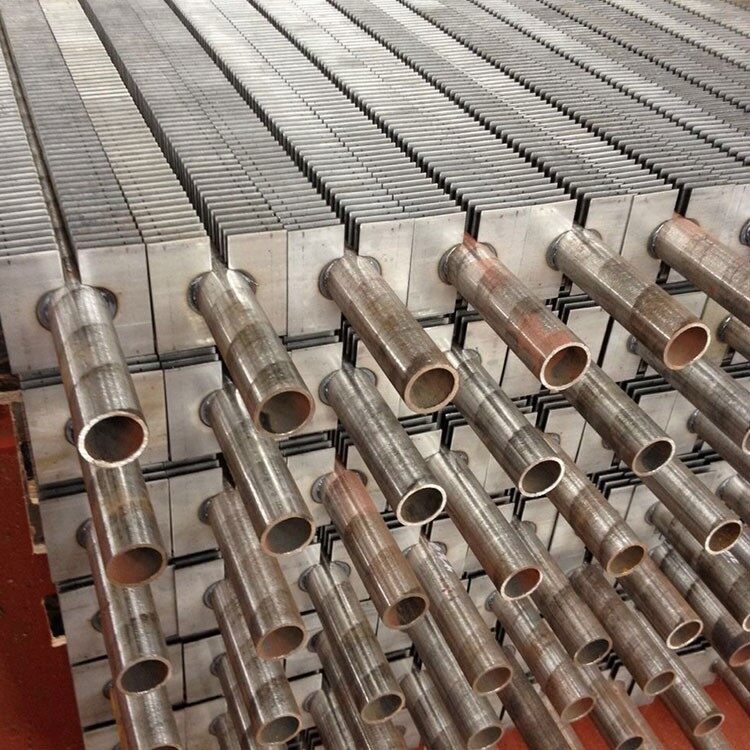
Cost efficiency
Improved thermal efficiency can lead to lower operational costs over time.
Heat exchangers: Finned tubes are extensively used in heat exchangers to enhance heat transfer efficiency. They are particularly useful in air-cooled heat exchangers, shell and tube heat exchangers, and fin tube heat exchangers.
HVAC systems: In HVAC systems, finned tubes are used in coils to increase the heat transfer rate between the refrigerant in the tube and the air flowing over the fins.
Power plants: Finned tubes are used in power plants for waste heat recovery and in condensers and coolers to improve efficiency.
Oil and gas industry: In oil refineries and natural gas processing plants, finned tubes are used in air coolers and other heat exchangers to control process temperatures.
Manufacturing and processing industries: In various manufacturing processes that require heating or cooling, finned tubes are used due to their high thermal efficiency.
Technical parameters
|
Product |
Type |
Tube Material |
Fin Material |
Tube Size |
Fin Size |
|
Heat Exchanger Finned Tube |
Extruded Fin Tube |
All Kind of Material can be applied |
Aluminum A1100 |
15.88~50.8 |
7~11.5FPI |
|
Fin Height Max 16mmH |
|||||
|
L-Foot Fin Tube |
All Kind of Material can be applied |
Copper C1100, C1220 |
12.70~50.8 |
7~11.5FPI |
|
|
(Wrap On Type) |
Fin Height Max 16mmH |
||||
|
G-Fin Tube (Embedded Type) |
Aluminum A1100, A1050, A1060 |
|
|||
|
High Frequency Welded Finned Tube |
A179 Carbon Steel Tube |
Carbon Steel Tube |
12.70~160 |
1.5~7FPI |
|
|
Stainless Steel Tube |
Stainless Steel Tube |
0.8~3.2mm. Thickness |
|||
|
Alloy Steel Material |
Alloy Steel Material |
|
|||
|
Integral Copper & Copper Alloy High Finned Tube |
C12200, C11000, C70600 |
C12200, C11000, C70600 |
15.88~22.23 |
5~9FPI |
|
|
Max 12mm. H |
|||||
|
Oval Finned Tube |
Carbon Steel Tube |
Carbon Steel Tube |
All Size Available |
5~15FPI |
|
|
Stainless Steel Tube |
Stainless Steel Tube |
||||
|
Alloy Steel Material |
Alloy Steel Material |
||||
|
Copper & Copper Alloy Tube |
Copper & Copper Alloy Tube |
||||
|
Monometallic Fin Tube |
Low Fin Tube |
Carbon Steel, stainless steel, titanium, copper, brass, nickel alloy, etc. |
-- |
9.52~40 |
12, 16, 19 28 FPI, etc. |
|
Turbo-C Tube |
|||||
|
Turbo-E Tube |
|||||
|
Corrugated Tube |
All Kind of Material |
-- |
6.35~40 |
2~9FPI |
Packing

Transportation

FAQ
We're well-known as one of the leading finned tube manufacturers and suppliers in China. If you're going to buy customized finned tube, welcome to get more information from our factory. Quality products and low price are available.
finnedtubeheatexchanger, Longitudinal Finned Tube, H finned Tube