

What is the fouling resistance of laser welded titanium finned tubes?
As a supplier of Laser Welded Titanium Finned Tubes, I've had numerous in - depth discussions with customers about the performance of these tubes, and one question that frequently arises is about their fouling resistance. In this blog, I'll delve into the concept of fouling resistance in laser welded titanium finned tubes, exploring its importance, influencing factors, and how it compares to other types of finned tubes.
Understanding Fouling Resistance
Fouling resistance refers to the ability of a heat exchanger tube to resist the accumulation of unwanted deposits on its surface. These deposits, known as fouling, can be composed of various substances such as minerals, biological matter, corrosion products, or particulate matter carried by the fluid flowing through the tube. When fouling occurs, it acts as an additional thermal resistance layer between the fluid and the tube wall, reducing the heat transfer efficiency of the tube.
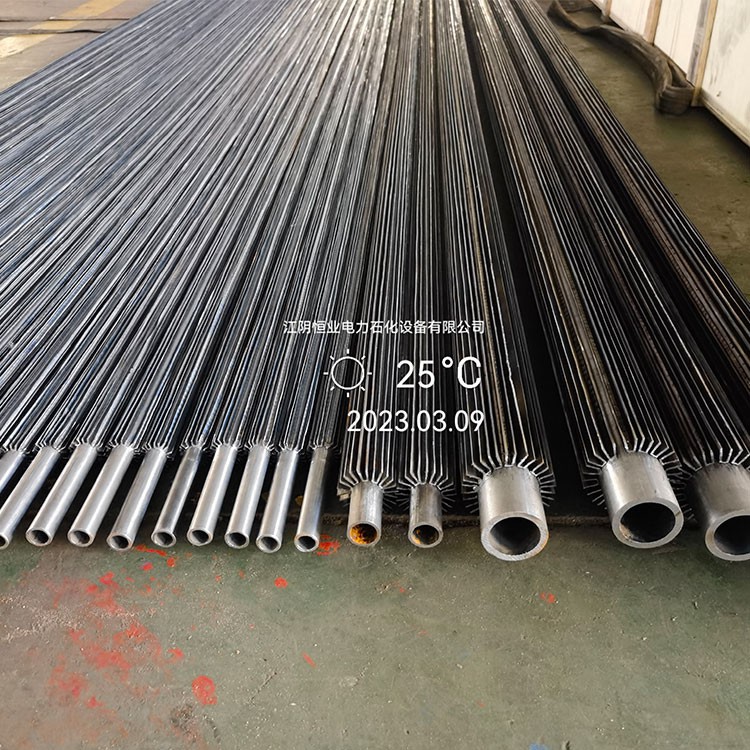
For laser welded titanium finned tubes, fouling resistance is a crucial performance indicator. Finned tubes are designed to enhance heat transfer by increasing the surface area available for heat exchange. However, if fouling occurs, the added surface area provided by the fins can also provide more space for deposits to accumulate, potentially exacerbating the heat transfer reduction.
Why Titanium?
Titanium is an excellent material choice for finned tubes when it comes to fouling resistance. Titanium has a high corrosion resistance, which means it is less likely to corrode in the presence of aggressive fluids. Corrosion products are a common source of fouling, so by using titanium, we can significantly reduce the likelihood of corrosion - induced fouling.
In addition, titanium has a smooth surface finish. A smooth surface is less likely to trap particles and deposits compared to a rough surface. This smoothness helps prevent the initial adhesion of fouling materials, which is the first step in the fouling process.
Factors Affecting the Fouling Resistance of Laser Welded Titanium Finned Tubes
- Fluid Properties: The properties of the fluid flowing through the tube play a significant role in fouling. For example, fluids with high mineral content are more likely to cause scaling fouling. Biological fouling can occur in fluids that contain living organisms. The velocity of the fluid also matters. A higher fluid velocity can help prevent the deposition of particles on the tube surface, while a lower velocity may allow particles to settle and accumulate.
- Operating Conditions: Temperature and pressure can influence fouling. High temperatures can promote chemical reactions that lead to the formation of fouling deposits. Pressure changes can also affect the solubility of substances in the fluid, potentially causing precipitation and fouling.
- Design of the Finned Tubes: The geometry of the fins can impact fouling resistance. Fins with a more complex shape may have areas where fluid flow is restricted, allowing particles to accumulate. On the other hand, well - designed fins can promote better fluid flow and reduce the likelihood of fouling. Laser welding technology ensures a precise and consistent fin design, which can contribute to improved fouling resistance.
Comparison with Other Types of Finned Tubes
When compared to other types of finned tubes, such as Welded Longitudinal Finned Tubes and G - finned Tube, laser welded titanium finned tubes generally offer superior fouling resistance.
Welded longitudinal finned tubes may be more prone to fouling in some cases, especially if the welding process leaves rough edges or if the base material is less corrosion - resistant. G - finned tubes, while having their own advantages in terms of heat transfer, may also face fouling challenges due to their unique fin design, which can create areas of low - velocity fluid flow.
Measuring Fouling Resistance
There are several methods to measure the fouling resistance of laser welded titanium finned tubes. One common approach is to monitor the change in heat transfer coefficient over time. As fouling occurs, the heat transfer coefficient will decrease. By comparing the initial and subsequent heat transfer coefficients, we can quantify the fouling resistance.
Another method is to visually inspect the tubes periodically. This can provide qualitative information about the type and extent of fouling. Advanced techniques such as ultrasonic testing can also be used to detect the presence of fouling beneath the surface of the tube.
Maintaining Fouling Resistance
To maintain the fouling resistance of laser welded titanium finned tubes, regular cleaning and maintenance are essential. Chemical cleaning can be used to remove fouling deposits, but care must be taken to ensure that the cleaning agents do not damage the titanium material. Mechanical cleaning methods, such as brushing or high - pressure water jetting, can also be effective.
It's also important to optimize the operating conditions of the heat exchanger. This may involve adjusting the fluid velocity, temperature, and pressure to minimize the likelihood of fouling.

Conclusion
The fouling resistance of laser welded titanium finned tubes is a critical aspect of their performance. Titanium's corrosion resistance and smooth surface, combined with the precision of laser welding technology, make these tubes an excellent choice for applications where fouling is a concern.
If you're in the market for high - performance finned tubes with excellent fouling resistance, our Laser Welded Finned Tube products are worth considering. We have a wide range of laser welded titanium finned tubes that can be customized to meet your specific requirements. Whether you're in the chemical, power generation, or refrigeration industry, our tubes can help you achieve efficient and reliable heat transfer.
If you're interested in learning more about our products or would like to discuss a potential purchase, please feel free to reach out. We're always ready to engage in a detailed discussion about your needs and how our laser welded titanium finned tubes can provide the best solution for your heat transfer applications.
References
- Incropera, F. P., & DeWitt, D. P. (2002). Fundamentals of Heat and Mass Transfer. Wiley.
- Taborek, J., & Hewitt, G. F. (1998). Heat Exchanger Design Handbook. Gulf Professional Publishing.