

As a supplier of High Frequency Welded Spiral Finned Tubes, I am often asked whether these tubes can be used in power plants. In this blog post, I will delve into this question, exploring the characteristics of High Frequency Welded Spiral Finned Tubes, the requirements of power plants, and the feasibility of their application in power plant systems.
Characteristics of High Frequency Welded Spiral Finned Tubes
High Frequency Welded Spiral Finned Tubes are manufactured through a high - frequency welding process. This process involves wrapping a fin strip around a base tube and then using high - frequency current to heat and weld the fin to the tube. The result is a strong and durable bond between the fin and the tube.
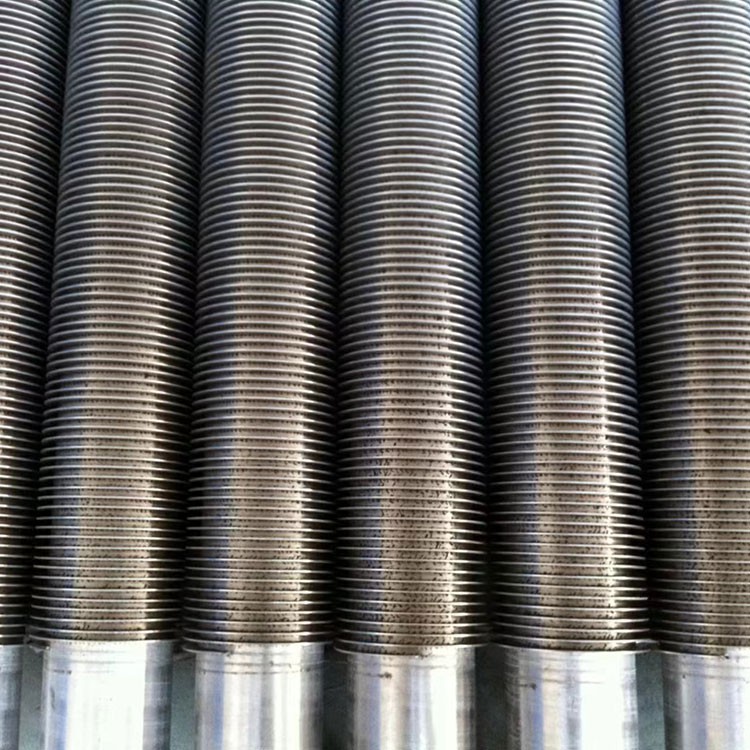

One of the key advantages of these tubes is their high heat transfer efficiency. The spiral fin design significantly increases the surface area of the tube, allowing for more effective heat exchange between the fluid inside the tube and the surrounding environment. This enhanced heat transfer performance can lead to improved energy efficiency in various thermal systems.
Another important characteristic is their mechanical strength. The high - frequency welding creates a reliable joint that can withstand high pressures and temperatures. This makes the tubes suitable for use in demanding industrial applications where mechanical integrity is crucial.
In addition, High Frequency Welded Spiral Finned Tubes offer good corrosion resistance. By selecting appropriate base tube and fin materials, such as stainless steel or carbon steel with proper coatings, the tubes can resist corrosion from various chemical substances and environmental factors.
Requirements of Power Plants
Power plants, whether they are coal - fired, gas - fired, or nuclear, have specific requirements for the equipment used in their systems.
Heat Transfer Efficiency
In power generation, heat transfer is a fundamental process. Power plants need to transfer heat from the heat source (such as burning coal or nuclear reactions) to the working fluid (usually water or steam) as efficiently as possible. High heat transfer efficiency means more power can be generated with the same amount of fuel input, reducing operating costs and environmental impact.
Durability and Reliability
Power plants operate continuously for long periods. The equipment used must be able to withstand high temperatures, high pressures, and mechanical vibrations without failure. Any breakdown in the heat transfer system can lead to costly shutdowns and potential safety hazards.
Corrosion Resistance
Power plant environments can be corrosive. For example, in coal - fired power plants, the combustion products contain sulfur compounds that can cause corrosion in the heat transfer equipment. In nuclear power plants, the coolant may also have specific chemical properties that require corrosion - resistant materials.
Space and Installation Constraints
Power plants often have limited space for equipment installation. Compact and easy - to - install heat transfer components are preferred to optimize the use of available space and reduce installation time and costs.
Feasibility of Using High Frequency Welded Spiral Finned Tubes in Power Plants
Heat Transfer Performance
The high heat transfer efficiency of High Frequency Welded Spiral Finned Tubes makes them a suitable candidate for power plant applications. In power plant boilers, for instance, these tubes can be used to transfer heat from the hot flue gases to the water or steam. The increased surface area provided by the spiral fins allows for more efficient heat absorption, which can improve the overall thermal efficiency of the boiler.
In steam condensers, the tubes can enhance the condensation process by facilitating better heat transfer between the steam and the cooling water. This can lead to improved power generation efficiency and reduced energy consumption.
Durability and Reliability
The mechanical strength of High Frequency Welded Spiral Finned Tubes meets the requirements of power plant operation. The high - frequency welded joint can withstand the high pressures and temperatures typically encountered in power plant systems. Whether it is in the high - pressure steam section of a boiler or the cooling system of a condenser, the tubes can maintain their integrity over long - term operation.
Corrosion Resistance
As mentioned earlier, power plant environments can be corrosive. By choosing the right materials for High Frequency Welded Spiral Finned Tubes, such as Laser Welded Stainless Finned Tubes, which offer excellent corrosion resistance, the tubes can be protected from the corrosive effects of combustion products, coolants, and other chemical substances.
Space and Installation
The compact design of High Frequency Welded Spiral Finned Tubes is beneficial for power plants with space constraints. Their spiral fin structure allows for a large heat transfer surface area in a relatively small volume. Moreover, the tubes are generally easy to install, which can reduce the installation time and labor costs in power plant construction or retrofit projects.
Comparison with Other Finned Tube Types
L - finned Tube
L - finned tubes have a different fin geometry compared to High Frequency Welded Spiral Finned Tubes. While L - finned tubes also increase the heat transfer surface area, their heat transfer performance may be lower in some cases due to the less efficient fin arrangement. High Frequency Welded Spiral Finned Tubes, with their continuous spiral fin, can provide a more uniform and efficient heat transfer path.
In terms of mechanical strength, the high - frequency welded joint of the spiral finned tubes is often stronger than the connection method used in some L - finned tubes. This makes the spiral finned tubes more suitable for high - pressure and high - temperature applications in power plants.
Welded Longitudinal Finned Tubes
Welded Longitudinal Finned Tubes have fins that run parallel to the axis of the tube. Although they can also improve heat transfer, the heat transfer enhancement is generally not as significant as that of High Frequency Welded Spiral Finned Tubes. The spiral fin design of the latter allows for a more complex fluid flow pattern around the tube, which can enhance the heat transfer coefficient.
In addition, the installation of Welded Longitudinal Finned Tubes may be more challenging in some power plant layouts compared to the more flexible High Frequency Welded Spiral Finned Tubes.
Case Studies
There are already some successful applications of High Frequency Welded Spiral Finned Tubes in power plants. In a coal - fired power plant, the replacement of traditional smooth tubes with High Frequency Welded Spiral Finned Tubes in the boiler's economizer section led to a significant increase in heat transfer efficiency. The plant was able to reduce its coal consumption by a certain percentage, resulting in cost savings and reduced emissions.
In a gas - fired power plant, the use of these tubes in the heat recovery steam generator improved the overall performance of the system. The high heat transfer efficiency and durability of the tubes contributed to the stable operation of the power plant and increased its power generation capacity.
Conclusion
In conclusion, High Frequency Welded Spiral Finned Tubes can indeed be used in power plants. Their high heat transfer efficiency, durability, corrosion resistance, and compact design meet the specific requirements of power plant applications. Compared with other finned tube types, they offer certain advantages in terms of performance and installation.
If you are involved in power plant construction, retrofit, or maintenance projects and are looking for high - quality heat transfer solutions, High Frequency Welded Spiral Finned Tubes could be an excellent choice. I encourage you to contact us for further discussions on your specific needs and to explore how our products can be integrated into your power plant systems. We are committed to providing you with the best products and services to ensure the efficient and reliable operation of your power plants.
References
- Incropera, F. P., & DeWitt, D. P. (2002). Fundamentals of Heat and Mass Transfer. Wiley.
- Cengel, Y. A., & Ghajar, A. J. (2015). Heat and Mass Transfer: Fundamentals and Applications. McGraw - Hill Education.
- ASME Boiler and Pressure Vessel Code, Section I - Power Boilers.