

In the contemporary era, energy conservation has emerged as a critical global issue, driving industries to adopt innovative technologies and solutions. Among these, L-finned tubes play a pivotal role in enhancing energy efficiency across various applications. As a leading supplier of L-finned tubes, I am excited to delve into the significance of these components in energy-saving technologies.
Understanding L-Finned Tubes
L-finned tubes are a type of heat transfer device characterized by their unique fin design. The "L" shape of the fins provides an extended surface area compared to traditional smooth tubes, which significantly improves the heat transfer efficiency. This design allows for more effective exchange of heat between the fluid inside the tube and the surrounding environment, whether it's air, water, or other media.
The manufacturing process of L-finned tubes involves precision engineering to ensure optimal performance. High-quality materials are selected to withstand different operating conditions, including high temperatures, pressures, and corrosive environments. The fins are securely attached to the tube, either through welding or mechanical means, to ensure a strong bond and efficient heat transfer.
The Role of L-Finned Tubes in Energy-Saving Technologies
1. Enhanced Heat Transfer Efficiency
One of the primary ways L-finned tubes contribute to energy savings is by improving heat transfer efficiency. In heat exchangers, which are widely used in industries such as power generation, chemical processing, and HVAC systems, the ability to transfer heat quickly and effectively is crucial. By increasing the surface area available for heat transfer, L-finned tubes can achieve higher heat transfer rates with less energy input.
For example, in a power plant, a steam generator uses heat exchangers to transfer heat from the combustion gases to the water to produce steam. By using L-finned tubes in these heat exchangers, the amount of heat transferred per unit of time can be significantly increased. This means that less fuel is required to generate the same amount of steam, resulting in lower energy consumption and reduced operating costs.
2. Reduced Energy Consumption in HVAC Systems
Heating, ventilation, and air conditioning (HVAC) systems account for a significant portion of energy consumption in commercial and residential buildings. L-finned tubes are commonly used in HVAC coils to improve the efficiency of heat transfer between the refrigerant and the air.
In an air conditioning system, the evaporator coil uses L-finned tubes to absorb heat from the indoor air. The increased surface area of the fins allows for more efficient heat transfer, enabling the system to cool the air more effectively with less energy. Similarly, in a heating system, the condenser coil with L-finned tubes can transfer heat from the refrigerant to the outdoor air more efficiently, reducing the energy required to heat the building.
3. Waste Heat Recovery
Another important application of L-finned tubes is in waste heat recovery systems. Many industrial processes generate a large amount of waste heat, which is often discarded into the environment. By using L-finned tubes in waste heat recovery units, this otherwise wasted energy can be captured and reused.
For instance, in a steel mill, the exhaust gases from the furnaces contain a significant amount of heat. A waste heat recovery system equipped with L-finned tubes can transfer this heat to a working fluid, such as water or steam. The heated fluid can then be used for various purposes, such as preheating the incoming air or generating electricity, thereby reducing the overall energy consumption of the plant.
4. Improved Process Efficiency in Chemical Industries
In the chemical industry, L-finned tubes are used in various heat transfer applications, such as reactors, distillation columns, and condensers. The enhanced heat transfer efficiency provided by L-finned tubes allows for more precise control of reaction temperatures and improved separation processes.
For example, in a distillation column, L-finned tubes can be used in the condenser to cool the vapor and condense it back into a liquid. The increased heat transfer rate ensures that the distillation process is more efficient, resulting in higher product yields and lower energy consumption.
Types of L-Finned Tubes and Their Applications
1. Laser Welded Finned Tube
Laser Welded Finned Tube is a type of L-finned tube that uses laser welding technology to attach the fins to the tube. This method provides a strong and reliable bond, ensuring excellent heat transfer performance. Laser welded finned tubes are suitable for high-temperature and high-pressure applications, such as power generation and petrochemical industries.
2. Laser Welded Stainless Finned Tube
Laser Welded Stainless Finned Tube is made of stainless steel, which offers excellent corrosion resistance. These tubes are commonly used in applications where the fluid being processed is corrosive, such as in the chemical and food processing industries. The laser welding process ensures a tight and uniform bond between the fins and the tube, maintaining high heat transfer efficiency even in harsh environments.
3. Welded Longitudinal Finned Tubes
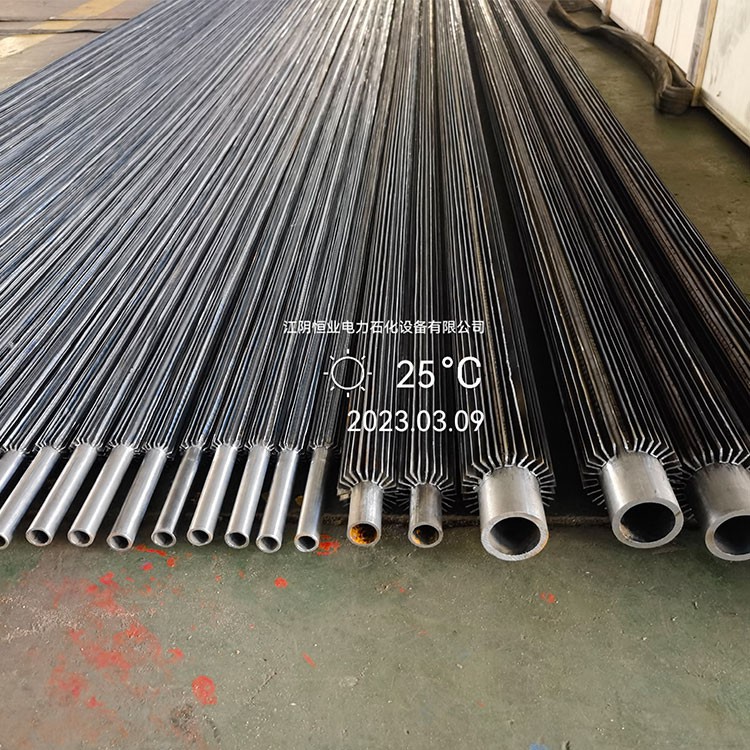
Welded Longitudinal Finned Tubes have fins that are welded longitudinally along the tube. This design provides a large surface area for heat transfer and is suitable for applications where a high flow rate of fluid is required. Welded longitudinal finned tubes are often used in air-cooled heat exchangers and industrial boilers.
Advantages of Choosing Our L-Finned Tubes
As a trusted supplier of L-finned tubes, we offer several advantages to our customers:
1. High-Quality Products
We use the latest manufacturing technologies and high-quality materials to ensure that our L-finned tubes meet the highest standards of performance and reliability. Our products undergo rigorous quality control tests to guarantee their efficiency and durability.
2. Customization Options
We understand that different applications have different requirements. That's why we offer customization options for our L-finned tubes, including fin height, pitch, and material selection. This allows us to provide tailored solutions that meet the specific needs of our customers.
3. Technical Support
Our team of experienced engineers and technicians is available to provide technical support and assistance to our customers. Whether you need help with product selection, installation, or maintenance, we are here to ensure that you get the most out of our L-finned tubes.
4. Competitive Pricing
We strive to offer our customers the best value for their money. Our competitive pricing, combined with the high quality of our products and services, makes us a preferred choice for customers looking for cost-effective energy-saving solutions.
Conclusion
L-finned tubes play a vital role in energy-saving technologies by enhancing heat transfer efficiency, reducing energy consumption, and enabling waste heat recovery. With their various types and applications, these tubes offer a wide range of solutions for industries looking to improve their energy efficiency and reduce their environmental impact.
As a leading supplier of L-finned tubes, we are committed to providing high-quality products and services that meet the needs of our customers. If you are interested in learning more about our L-finned tubes or would like to discuss your specific requirements, please feel free to contact us. We look forward to the opportunity to work with you and help you achieve your energy-saving goals.

References
- Incropera, F. P., & DeWitt, D. P. (2002). Fundamentals of Heat and Mass Transfer. Wiley.
- Kakac, S., & Liu, H. (2002). Heat Exchangers: Selection, Rating, and Thermal Design. CRC Press.
- Shah, R. K., & Sekulic, D. P. (2003). Fundamentals of Heat Exchanger Design. Wiley.