

Understanding the fin thickness of an LL-finned tube is crucial for various industrial applications. As a reliable supplier of LL - finned tubes, I am often asked about this specific characteristic. In this blog, I will delve into what the fin thickness of an LL - finned tube means, its significance, how it varies in different scenarios, and its impact on the performance of the finned tubes.
What is an LL - finned tube?
Before we discuss fin thickness, it's essential to understand what an LL - finned tube is. An LL - finned tube is a type of finned tube that features longitudinal fins. These fins are attached to the outer surface of the tube in a longitudinal direction, which helps to increase the heat transfer area significantly compared to a bare tube. LL - finned tubes are widely used in heat exchangers, air coolers, and other thermal equipment, where efficient heat transfer is required.
The LL - finned tubes come in different forms and are used in diverse industrial settings. For heavy - duty constructions, a Longitudinal Fin Tube for Heavy Duty Constructions is often the choice. These tubes are designed to withstand harsh environments and high - pressure applications. On the other hand, Rolled Finned Tube are another type of LL - finned tube where the fins are formed by a rolling process, which can provide a more uniform fin structure. And Laser Welded Stainless Finned Tube offer high - quality fin - tube connections, especially suitable for applications requiring corrosion resistance.
Defining fin thickness in LL - finned tubes
The fin thickness of an LL - finned tube refers to the thickness of the longitudinal fins that are attached to the tube surface. It is a critical dimension that affects multiple aspects of the tube's performance. Fin thickness is typically measured in millimeters (mm) or inches (in), depending on the industry standards and regional preferences.
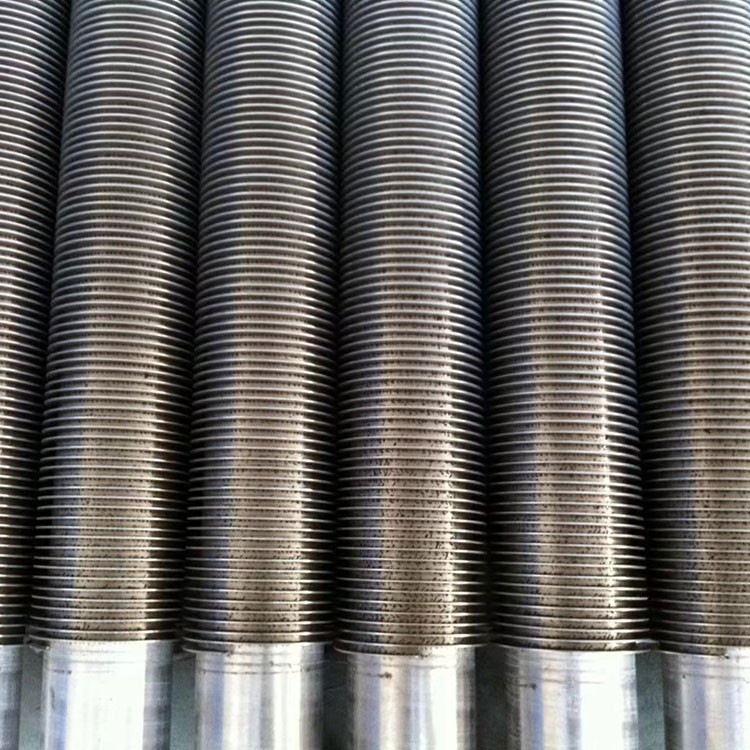

The value of fin thickness can vary widely depending on the application requirements. Generally, the range of fin thickness for LL - finned tubes can be from as thin as 0.2 mm for some light - duty applications to over 3 mm for heavy - duty and high - performance heat transfer scenarios. For example, in small - scale air - cooling systems where space is limited and the temperature difference is not extremely high, thinner fins might be sufficient. In contrast, large - scale industrial heat exchangers dealing with high - temperature fluids and high - pressure conditions often require thicker fins.
Significance of fin thickness
Heat transfer efficiency
One of the most important impacts of fin thickness is on heat transfer efficiency. Thicker fins can store more thermal energy, which allows for better heat conduction from the tube to the surrounding fluid. However, there is a limit to this. If the fins are too thick, the thermal resistance within the fin increases, which can slow down the heat transfer process. On the other hand, thinner fins have less internal thermal resistance, but they may not be able to store enough heat for efficient transfer. Therefore, an optimal fin thickness needs to be determined based on the specific heat transfer requirements of the application.
Structural integrity
Fin thickness also plays a crucial role in maintaining the structural integrity of the LL - finned tube. In applications where there are high - velocity fluid flows or mechanical vibrations, thicker fins are better able to withstand the forces exerted on them. They are less likely to bend or break, which helps to ensure the long - term reliability of the finned tube. For instance, in power plants where the finned tubes are exposed to high - speed steam flows, thicker fins are necessary to prevent damage.
Cost - effectiveness
The cost of manufacturing an LL - finned tube is also related to the fin thickness. Thicker fins require more material, which increases the raw material cost. Additionally, the manufacturing process for thicker fins may be more complex and time - consuming, leading to higher production costs. Therefore, a balance needs to be struck between the performance requirements and the cost when choosing the fin thickness. In some cases, a slightly thinner fin may be a more cost - effective option if it can still meet the basic performance criteria.
Factors influencing fin thickness selection
Fluid properties
The properties of the fluid (either liquid or gas) that is in contact with the finned tube have a significant influence on fin thickness selection. For fluids with high thermal conductivity, such as water, thinner fins may be adequate because the heat can be transferred more easily. In contrast, for fluids with low thermal conductivity, like air, thicker fins may be required to enhance the heat transfer. For example, in an air - cooled condenser, the fin thickness is usually carefully designed to maximize the heat transfer between the hot refrigerant inside the tube and the ambient air outside.
Operating conditions
The operating temperature and pressure of the system are also important factors. Higher operating temperatures may require thicker fins to prevent thermal deformation. Similarly, in high - pressure systems, thicker fins can resist the pressure forces and maintain their shape. For instance, in a high - pressure steam boiler, the LL - finned tubes need to have appropriate fin thickness to ensure safe and efficient operation.
Application type
Different applications have different requirements for fin thickness. In HVAC systems, where the focus is often on energy efficiency and space - saving, the fin thickness is usually relatively thin. In industrial heat exchangers for chemical processes, where high - heat transfer rates and durability are essential, thicker fins are commonly used.
Measuring and controlling fin thickness
To ensure the quality of LL - finned tubes, accurate measurement of fin thickness is necessary. This can be done using various measurement tools such as micrometers, calipers, or optical measurement devices. During the manufacturing process, strict quality control measures are implemented to maintain the desired fin thickness. For example, in the rolling or welding process of finned tubes, the equipment is calibrated regularly to ensure consistent fin thickness throughout the production.
Conclusion
In conclusion, the fin thickness of an LL - finned tube is a critical parameter that affects heat transfer efficiency, structural integrity, and cost - effectiveness. As a supplier of LL - finned tubes, we understand the importance of providing the right fin thickness for each specific application. By considering factors such as fluid properties, operating conditions, and application type, we can help our customers select the most suitable LL - finned tubes.
If you are in the market for LL - finned tubes and want to discuss the optimal fin thickness for your project, please feel free to contact us. We are ready to provide you with professional advice and high - quality products that meet your specific requirements.
References
- Incropera, F. P., & DeWitt, D. P. (2001). Fundamentals of Heat and Mass Transfer. Wiley.
- Holman, J. P. (1997). Heat Transfer. McGraw - Hill.