

Hey there! As a supplier of L-finned tubes, I've been getting a lot of questions lately about how fin density affects heat transfer and pressure drop. So, I thought I'd sit down and write a blog post to share what I've learned over the years.
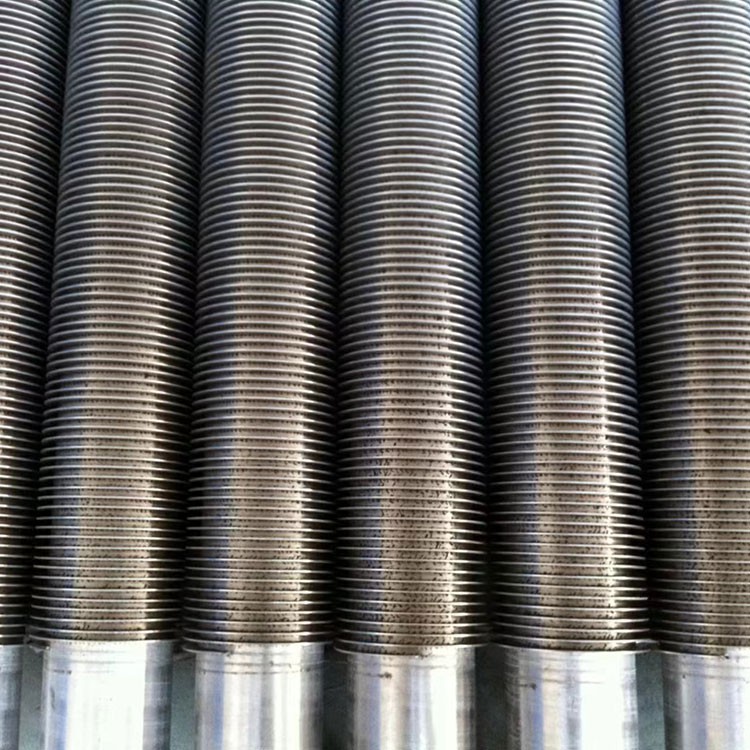
First off, let's talk about what fin density is. Simply put, fin density refers to the number of fins per unit length on a finned tube. It's usually measured in fins per inch (FPI). A higher fin density means more fins are packed into a given length of the tube.
Now, let's dive into how fin density impacts heat transfer. Heat transfer is all about moving heat from one place to another, and finned tubes are designed to enhance this process. When we increase the fin density, we're essentially increasing the surface area available for heat transfer. You see, the fins act like little heat transfer boosters. They provide more space for the heat to jump from the tube to the surrounding fluid (or vice versa). So, in theory, a higher fin density should lead to better heat transfer.
But here's the thing: it's not always that straightforward. As we add more fins, the flow of the fluid around the tube becomes more complex. The fluid has to navigate through a maze of fins, and this can cause some issues. At a very high fin density, the fluid might not be able to flow freely, and a phenomenon called "flow stagnation" can occur. In areas where the flow is stagnant, the heat transfer rate actually drops because there's not enough fresh fluid coming in to carry the heat away.
Another factor to consider is the material of the fins. Different materials have different thermal conductivities. If we use a material with low thermal conductivity and pack the fins too closely together, the heat might not be able to spread efficiently through the fins. This can also limit the overall heat transfer performance.
Now, let's move on to pressure drop. Pressure drop is the loss of pressure that occurs as the fluid flows through the finned tube. When we increase the fin density, the pressure drop typically goes up. Remember how I mentioned that the fluid has to navigate through a maze of fins? Well, this creates more resistance to the flow. The more fins there are, the more obstacles the fluid has to overcome, and this results in a higher pressure drop.
A high pressure drop can be a problem in many applications. It means that more energy is required to pump the fluid through the system. This can lead to increased operating costs and might even require a more powerful pump. So, when designing a system with finned tubes, we need to find a balance between heat transfer and pressure drop.
Let's take a look at some real-world examples. In a HVAC (Heating, Ventilation, and Air Conditioning) system, we often use finned tubes to transfer heat between the refrigerant and the air. If we increase the fin density of the tubes, we can potentially improve the cooling or heating efficiency of the system. However, if the pressure drop becomes too high, the fan might not be able to push the air through the fins effectively, and the overall performance of the system will suffer.

In a power plant, finned tubes are used in heat exchangers to transfer heat from the hot exhaust gases to the water. Here, a high fin density can help extract more heat from the exhaust gases, but it also means that the pressure drop of the exhaust gases will increase. This can affect the efficiency of the power plant's turbines.
Now, I'd like to mention some other types of finned tubes that you might be interested in. If you're looking for alternative options, you can check out G-finned Tube. These tubes have a unique fin design that offers different heat transfer and pressure drop characteristics. Another option is the Laser Welded Stainless Finned Tube. The laser welding process ensures a strong bond between the fins and the tube, which can improve the heat transfer performance. And if you're in the market for something different, the H-finned Tube is also worth considering.
So, how do we find the optimal fin density for a specific application? It usually involves a combination of theoretical calculations, computer simulations, and experimental testing. We need to take into account factors such as the type of fluid, the flow rate, the temperature difference, and the overall system requirements.
As a supplier of L-finned tubes, I understand that every customer has unique needs. Whether you're working on a small-scale project or a large industrial application, I'm here to help you find the right fin density for your L-finned tubes. We can work together to analyze your requirements and come up with a solution that maximizes heat transfer while keeping the pressure drop within acceptable limits.
If you're interested in learning more about our L-finned tubes or have any questions about fin density and its effects, don't hesitate to reach out. Let's start a conversation and see how we can make your project a success. Whether it's for a new installation or an upgrade to an existing system, I'm confident that we can provide you with high-quality L-finned tubes that meet your needs. So, let's get in touch and start discussing your project today!
References
- Incropera, F. P., & DeWitt, D. P. (2002). Fundamentals of Heat and Mass Transfer. Wiley.
- Kays, W. M., & London, A. L. (1998). Compact Heat Exchangers. McGraw-Hill.