

Hey there! As a supplier of welded longitudinal finned tubes, I'm super stoked to take you through the manufacturing process of these nifty tubes. So, let's dive right in!
Starting with the Basics: Materials
First off, we gotta pick the right materials. The base tube is usually made of materials like carbon steel, stainless steel, or even aluminum, depending on what the end - use is. Carbon steel is a popular choice because it's strong, relatively inexpensive, and can handle a wide range of temperatures. Stainless steel, on the other hand, is great for applications where corrosion resistance is a must, like in chemical processing plants. And aluminum is lightweight and has excellent heat transfer properties, making it ideal for some specific heat exchanger applications.
The fins, well, they're typically made from the same material as the base tube. This ensures good compatibility and a strong bond between the tube and the fins during the welding process. But sometimes, we might use a different material for the fins if we need to optimize certain properties. For example, using a high - conductivity material for the fins to improve heat transfer.
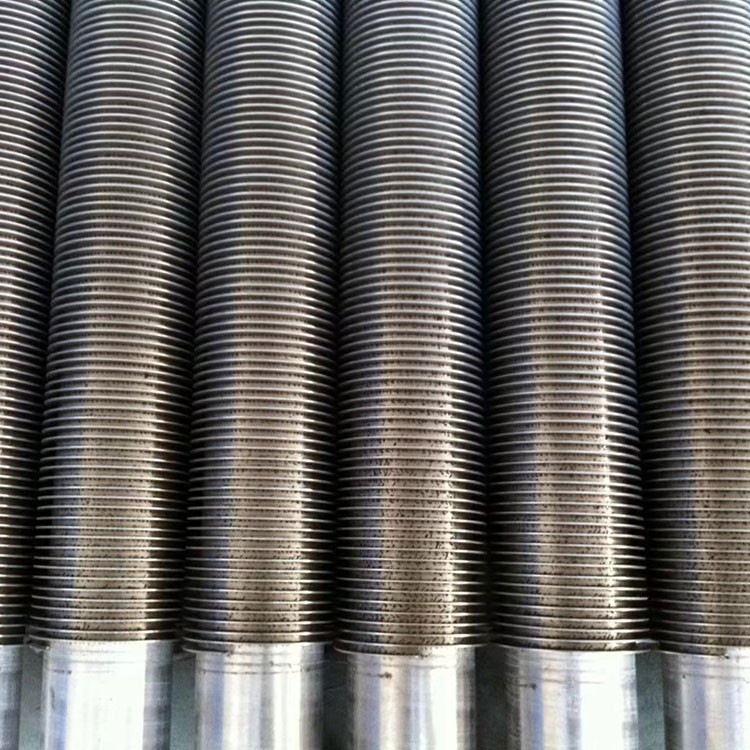

Tube Preparation
Once we've got our materials sorted, it's time to prepare the base tube. We start by cutting the tube to the right length. This is done using precision cutting tools to make sure the length is spot - on. After cutting, we clean the tube thoroughly. Any dirt, grease, or rust on the tube surface can mess up the welding process. So, we use solvents or mechanical cleaning methods to get the tube surface nice and clean.
We also might perform some surface treatment on the tube. This could involve things like sandblasting to create a rough surface. A rough surface helps the weld to adhere better, which is crucial for a strong and durable fin - tube connection.
Fin Material Preparation
The fin material also needs some prep work. Similar to the tube, we cut the fin strip to the appropriate width and length. The width of the fin is carefully chosen based on the design requirements of the finned tube. A wider fin can increase the heat transfer area, but it also adds more weight and might affect the flow of fluid around the tube.
The edges of the fin strip are also smoothed out. Any sharp edges or burrs can cause problems during the welding process or might damage the equipment. After that, we clean the fin strip to remove any contaminants, just like we did with the base tube.
Welding Process
Now, this is the heart of the manufacturing process - the welding. There are a few different welding methods we can use to attach the fins to the base tube.
Resistance Welding
One common method is resistance welding. In this process, the fin strip is placed along the length of the base tube. Then, electrodes are applied to the fin and the tube. An electric current is passed through the contact area between the fin and the tube. The electrical resistance at this contact point generates heat, which melts the materials and fuses them together.
Resistance welding is great because it's fast and can produce a strong bond. But it does require careful control of the welding parameters like current, pressure, and time. If these parameters are off, we might end up with a weak weld or even burn through the materials.
TIG Welding
Tungsten Inert Gas (TIG) welding is another option. It's a more precise welding method. A non - consumable tungsten electrode is used to create an arc between the electrode and the workpiece (the fin and the tube). An inert gas, usually argon, is used to shield the weld area from atmospheric contamination.
TIG welding gives us a high - quality weld with excellent control over the welding process. We can adjust the heat input very accurately, which is important when working with different materials or thin - walled tubes. However, it's a slower process compared to resistance welding and requires more skilled operators.
Laser Welding
Laser welding is becoming increasingly popular in the manufacturing of welded longitudinal finned tubes. In laser welding, a high - intensity laser beam is focused on the joint between the fin and the tube. The laser energy melts the materials, and as they cool down, they form a strong bond.
The Laser Welded Stainless Finned Tube produced by laser welding has some great advantages. It offers a very precise and narrow weld bead, which means less distortion of the tube and fin. It also has a high welding speed and can be automated easily, which is great for large - scale production.
Quality Control
After the welding is done, we don't just send the tubes out the door. We have a rigorous quality control process in place. First, we visually inspect the welded finned tubes. We look for any obvious defects like cracks, incomplete welds, or misaligned fins.
We also perform non - destructive testing methods. One common method is ultrasonic testing. Ultrasonic waves are sent through the weld area, and any internal defects like voids or lack of fusion can be detected by analyzing the reflected waves.
Another method is X - ray testing. This is especially useful for detecting internal defects in thicker - walled tubes or complex welds. X - rays can penetrate the materials and show us what's going on inside the weld.
Finishing Touches
Once the tubes pass the quality control tests, we might perform some finishing operations. This could include straightening the tubes if they've become slightly bent during the welding process. We use specialized straightening equipment to make sure the tubes are perfectly straight.
We also might apply a coating to the finned tubes. A coating can provide additional protection against corrosion or improve the heat transfer properties. For example, a ceramic coating can increase the emissivity of the tube surface, which helps in better heat radiation.
Different Types of Finned Tubes
There are several types of welded longitudinal finned tubes that we offer. The Longitudinal Finned Tube is a classic design where the fins run parallel to the axis of the tube. This type is widely used in heat exchangers, boilers, and other thermal equipment.
The HH - finned Tube is another interesting option. It has a unique fin design that provides enhanced heat transfer performance. The HH - finned tubes are often used in applications where high - efficiency heat transfer is required, such as in power plants or chemical refineries.
Why Choose Our Welded Longitudinal Finned Tubes
We take pride in the quality of our welded longitudinal finned tubes. Our manufacturing process is carefully controlled to ensure that each tube meets the highest standards. We use the latest technology and equipment to produce tubes with excellent heat transfer performance, strong welds, and long - lasting durability.
Whether you're in the market for a small batch of finned tubes for a research project or a large quantity for an industrial application, we've got you covered. Our team of experts is always ready to help you choose the right type of finned tube for your specific needs.
Let's Talk Business
If you're interested in our welded longitudinal finned tubes, we'd love to hear from you. Whether you want to know more about the manufacturing process, get a quote, or discuss your specific requirements, don't hesitate to reach out. We're here to make sure you get the best finned tubes for your project. So, let's start a conversation and see how we can work together to meet your needs.
References
- "Heat Exchanger Design Handbook" by A. Shah and D. Sekulic
- "Welding Technology and Applications" by J. Lancaster